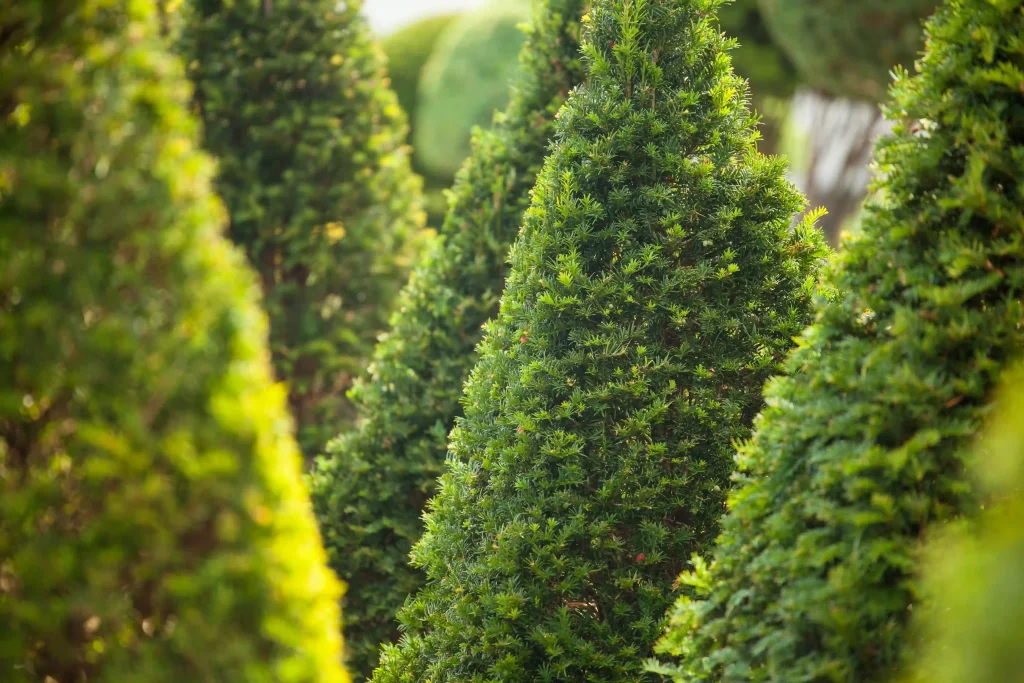
Green live walls vs. Cocrete:
The Best Plants for Privacy
Looking for the perfect green hedge in Tbilisi? Discover the best fast-growing plants for living fences in Georgia. Expert advice on selection, planting, and maintenance.
The number one request we hear from new villa owners is:
“I want privacy. I don’t want to see my neighbors, and I don’t want them to see me.”
The instinct is often to build a massive brick or concrete wall. But before you pour tons of cement, consider the alternative: a Living Fence. A green wall is not just a barrier; it is an active ecosystem.
Unlike concrete, which absorbs heat and radiates it back (making your garden hotter in summer), a hedge cools the air through evaporation. It also acts as a filter, trapping dust and dampening street noise far better than a hard surface.
But which plants grow fast enough to give you privacy quickly? Here are the Top Three Best Sellers from our nursery that thrive in the Georgian climate.

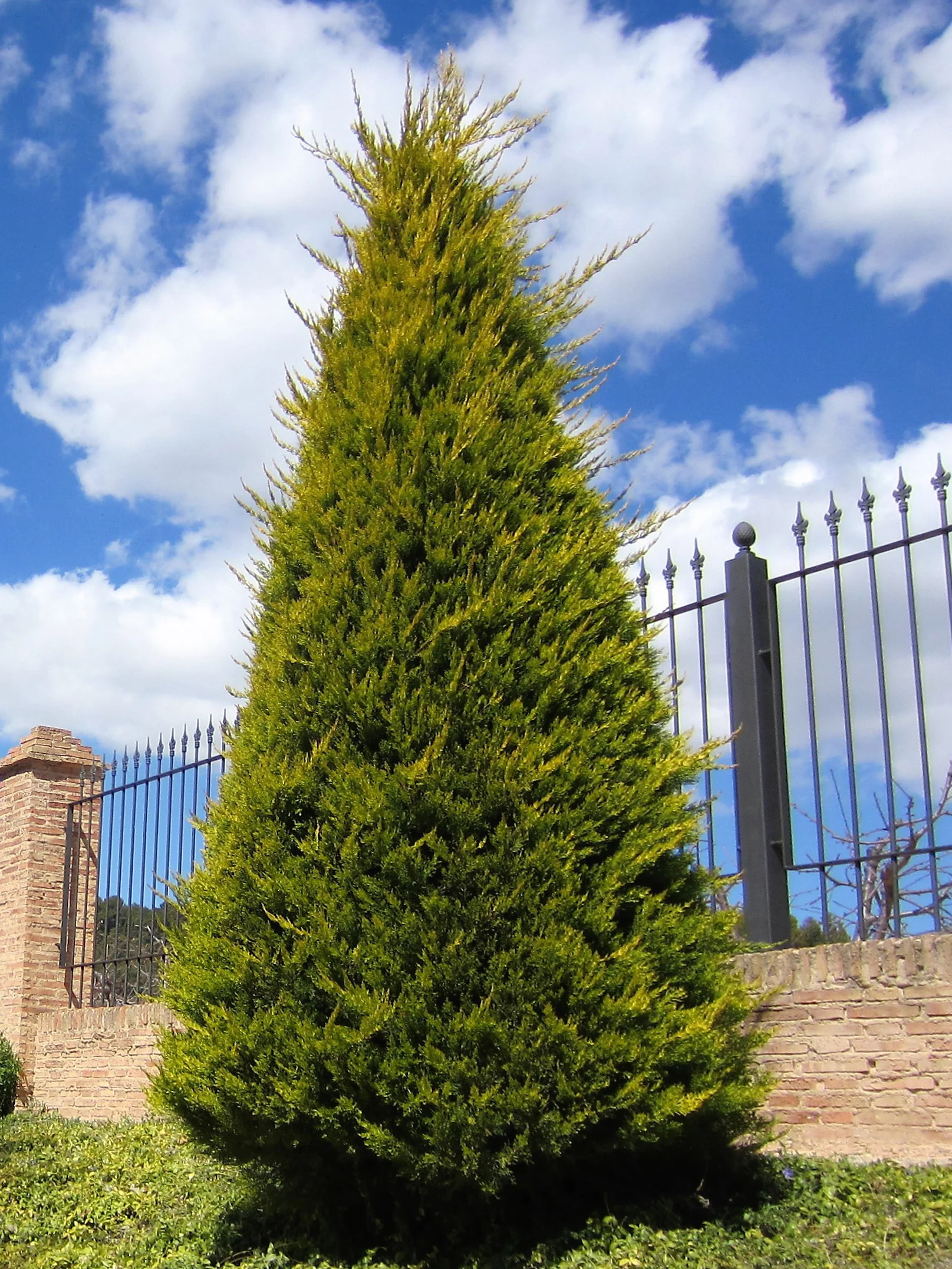
The Speed Champion: Leyland Cypress (Cupressocyparis leylandii)
Best for: People who are impatient and have large gardens. If you need a wall "yesterday," this is your plant. The Leyland Cypress is the Formula 1 car of the hedge world. In Georgia's climate, it can grow up to 1 meter per year once established.
Pros: Extremely fast growth; stays green all year; blocks wind effectively.
Cons: Because it grows so fast, you must trim it 2-3 times a year, or it will become a giant monster. It needs space.

The Elegant Classic: Thuja 'Smaragd'
(Thuja occidentalis)
Best for: Neat, formal gardens and smaller spaces. You have seen this everywhere, and for good reason. Unlike other Thujas that turn bronze or brown in winter, the 'Smaragd' (Emerald) keeps its bright, fresh green color year-round. It has a naturally neat, conical shape, so it doesn't need constant pruning.
Pros: Low maintenance; beautiful color; pleasant smell; looks very "expensive" and tidy.
Cons: Grows slower than the Cypress (about 30-40 cm per year), so you need to buy larger plants initially if you want immediate results.

The Glossy Broadleaf: Cherry Laurel (Prunus laurocerasus)
Best for: Shady areas and a "lush jungle" look. Not everyone likes the look of needles (conifers). If you prefer shiny, broad leaves, the Cherry Laurel is the king. It is incredibly tough and is one of the few screening plants that thrives even in the shade of large trees or buildings.
Pros: Beautiful glossy leaves; tolerates shade; produces white flowers in spring; very dense (you can't see through it).
Cons: All parts of the plant are toxic if eaten (keep this in mind if you have a puppy that chews everything).
Looking for a lush, private green barrier?
We offer premium varieties perfectly adapted to the local climate, including Leyland Cypress, Thuja ‘Smaragd’, and Cherry Laurel. These plants provide the ultimate solution for density, speed of growth, and year-round beauty.
We offer more than just plants—we provide a complete service. From professional selection and expert planting to precise long-term maintenance and pruning, we handle every detail of your green hedge. Fill out the form below, and let’s grow your privacy together.”
Frequently Asked Questions (FAQ)
Which plants grow the fastest for a privacy hedge?
Leyland Cypress is the fastest grower among our selection, perfect if you need to create a tall, dense screen in a short period. For a more formal, emerald-green look,
Thuja ‘Smaragd’ is a reliable choice that grows steadily to provide excellent coverage.
What is the best variety for a low-maintenance hedge?
Cherry Laurel is exceptionally robust and requires less frequent pruning than conifers to maintain a tidy appearance. Its large, glossy leaves also add a sophisticated, lush texture to any garden.
Do you provide maintenance services like pruning and planting?
Yes, we offer full-service support. Whether you need professional planting to ensure your hedge thrives from day one or expert pruning to keep your greenery dense and healthy, our team is equipped to manage the entire process for you.
How often do these hedge plants need to be watered in Georgia?
Newly planted hedges require regular watering, especially during the first two years. In the Georgian climate, we recommend deep watering 2–3 times a week during summer to establish a strong root system, after which they become more resilient.
At Sarti Flora, we grow all three varieties in our nursery in Sartichala.
We recommend planting them in autumn or early spring for the best root establishment.
Come visit us, and we will calculate exactly how many trees you need for your fence!
Read more tips from our experts
More articles to help your garden thrive. Knowledge, inspiration, and practical guides for every season.

The Richness of Japanese Maples: The Jewel of the Autumn Garden
Growing Japanese maples in Georgia guarantees a spectacular autumn display.
Discover our favorite varieties tested for the local climate and learn how to plant and care for them correctly.

Is It Possible to Prune a Pine Tree? (And Why You Should Do It Now)
Learn how to prune a pine tree correctly without damaging its health.
Discover the best timing, techniques for handling “candles,” and essential pine tree care tips.
Is My Garden Safe? How to Identify and Manage “Poisonous Plants”
Our comprehensive guide helps you identify poisonous garden plants and shares practical tips for creating a safe, non-toxic outdoor space for kids and pets.
